Southeastern European Studies/Romanian Studies: The Fascination and Variety of Southeastern Europe
Cultural and Information Days
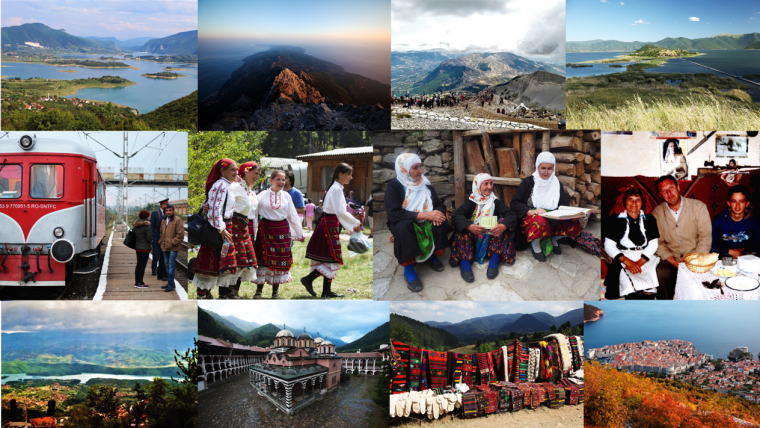
The ethnic, cultural, religious and scenic multifaceted Southeastern Europe is a very pretty, exciting and varying region. It is characterised by a special charm, an incredible hospitality and kindness of the people, spectacular unforgettable landscapes, natural spectacles and architectural forms, by a wonderfully cultural, musical and culinary tradition and movingly sweeping history, many interesting languages, religious forms and ethnical groups as well as by a special creativity and mysticism. Every country on its own has its very special appealing sides.
The typical variety of Southeastern Europe has ambivalent sides too, though. Unfortunately the region's image within the broad public is still shaped too much by the wars of the 1990s in Ex-Yugoslavia and their aftermath, poverty, refugee crisis, corruption, political instability etc. At this, many prejudices and distorted images were formed and the various positive and fascinating sides of the region have faded wrongfully into the background.
Those become easily accessible, however, if one's at least delves a little into the region, its people and its cultures. An intensive research and teaching to this is carried out by the division "Southeastern European Studies" at the Friedrich Schiller University Jena that conducts, with support of the "Society of Balkanologists" and the "Southeastern-Europe-Society", Cultural and Information Days (4 Dec 2029 to 6 Dec 2019) as well as a Photographic Exhibition about Southeastern Europe (4 Dec 2019 to 5 Mar 2020).
The division's lecturers and students like foreground the interesting and positive sides of Southeastern Europe by the means of these events and let the public participate in their passion for the Balkans. by doing so the ambivalent and complicated sides of this region will be incorporated too, of course – not at least because especially this mutual interaction with the pleasant and pretty aspects constitutes the indescribable and interesting appeal of Southeastern Europe. At this, the Balkan's enormous diversity is only to be presented selectively and partially within the scope of limited possibilites.
Nonetheless they hope that the audience's curiostiy about the vast richness and beauty of this region, that only waits to be discovered and enjoyed by tourists from Middle and Western Europe, can be aroused.
The events in no way do address only some university-bound audience but especially the broad public from very young to very old. Accordingly the films, workshops and the concert are themed but the lectures are shaped as well.
Delve into a various, fascinating, interesting and enchanting world that offers something for every taste and that more than deserves it to be dealt with.
| Date/Time | Venue | Event |
| Wednesday, 4 Dec 2019 |
Café Wagner (Wagnergasse 26) |
|
| 18:00 CET | Opening Address of the Cultural and Information Days | |
|
|
Time for Documentaries, Part 1 – Culture and Politics | |
| 18:15 CET |
Lecture by Henry Rammelt (SNSPA Bukarest): "Research goes Public - On Intersections of Research and Filmaking: Protests in Romania and the Documentary Film 'Portavoce'" |
|
| 20:00 CET | Presentation of the Romanian documentary „Portavoce“ | |
|
Thursday, 5 Dec 2019 (15:00 – 19:15 CET) |
Haus auf der Mauer, Großer Saal (Johannisplatz 26) |
Multimedia Series of Lectures with Round of Questions – Insight into particular Topics of the interdisciplinary Southeastern European Studies |
|
|
Introduction to the Southeastern European Studies | |
| 15:00 CET | Welcoming Address (Thede Kahl) | |
| 15:15 – 15.45 CET |
Multimedia and Interactive Presentation of the Southeastern European Studies in Jena (Gergana Börger, Dimiter Peev) |
|
|
Representative contributions from the particular areas of studies wthin the Southeastern European Studies |
||
| 16:00 – 16:30 CET |
"Disparate Memories of the Romanian 'December Incidents' in 1989. A Survey 30 years after"(Romanian Studies: Valeska Bopp-Filimonov) |
|
| 16:30 – 17:00 CET |
"Create 'Turkey-Slavistics'? Hidden mass and underestimated potential. The presence and significance of Slavic groups in Turkey." (South-Slavistics: Christoph Giesel, Thede Kahl) |
|
| 17:00 – 17:30 CET |
"East-Balkans vs. West-Balkans. Linguistic projections of analytism" (South-Slavistics: Dimiter Peev) |
|
| 17:45 – 18:15 CET |
"Bosnia as nostalgic imagination. Cultural Self- and External descriptions in the 20th century" (Eastern European History: Dennis Dierks) |
|
| 18:15 – 18:45 CET |
"Albanians and Slavs on the Balkans. An alternative view on symbioses and similarities within an alleged 'conflict community'" (Christoph Giesel: Multidisciplinary ethnological-historical-political-scientifical Presentation) |
|
| 18:45 – 19:15 CET |
Round of Question, contentual discussions and conclusive annotations |
|
|
|
Time for Documentaries, Part 2: Society, History and Culture |
|
| 20:00 CET |
Presentation of two short films, „Revolucionarni dom“ (Revolutionary home) and „Nekome Svome“ (Ours) by Montenegrin film maker Sead Šabotić, with explanations and discussions |
|
| ca. 21:30 CET |
End of Event |
|
|
|
||
| Friday, 6 Dec 2019 |
|
|
| 15:30 – 17:00 CET |
Haus auf der Mauer, Großer Saal (Johannisplatz 26) |
Time for Documentaries, Part 3 – Culture, History and Politics Presentation of the Bulgarian documentary "Chia e tazi pesen?/Whose is this song?" (2003, Original with English subtitles) |
|
Institute for Slavistics and Caucasian Studies (Ernst-Abbe-Platz 8, SR 301) |
||
| 17:30 – 18:45 CET |
Presentation about the culinary specialities of Southeastern Europe with Food Samples. (Dimiter Peev, Christoph Giesel) |
|
| 19:00 – 20:00 CET |
Workshop: Traditional Music and Dances of Southeastern Europe (Thede Kahl, Andreea Pascaru) |
|
| 20:30 – ca. 23:00 CET |
Auditorium „Zur Rosen” (Johannisstr. 13) |
Cultural Event of Conclusion in the evening Live-ConCert: „Canticas de Sefarad“ (Erfurt), Jewish-Sephardic music with reference to Southeastern Europe and dance as well as convivial conclusion of the Cultural and Information Days |