Renáta Uitz
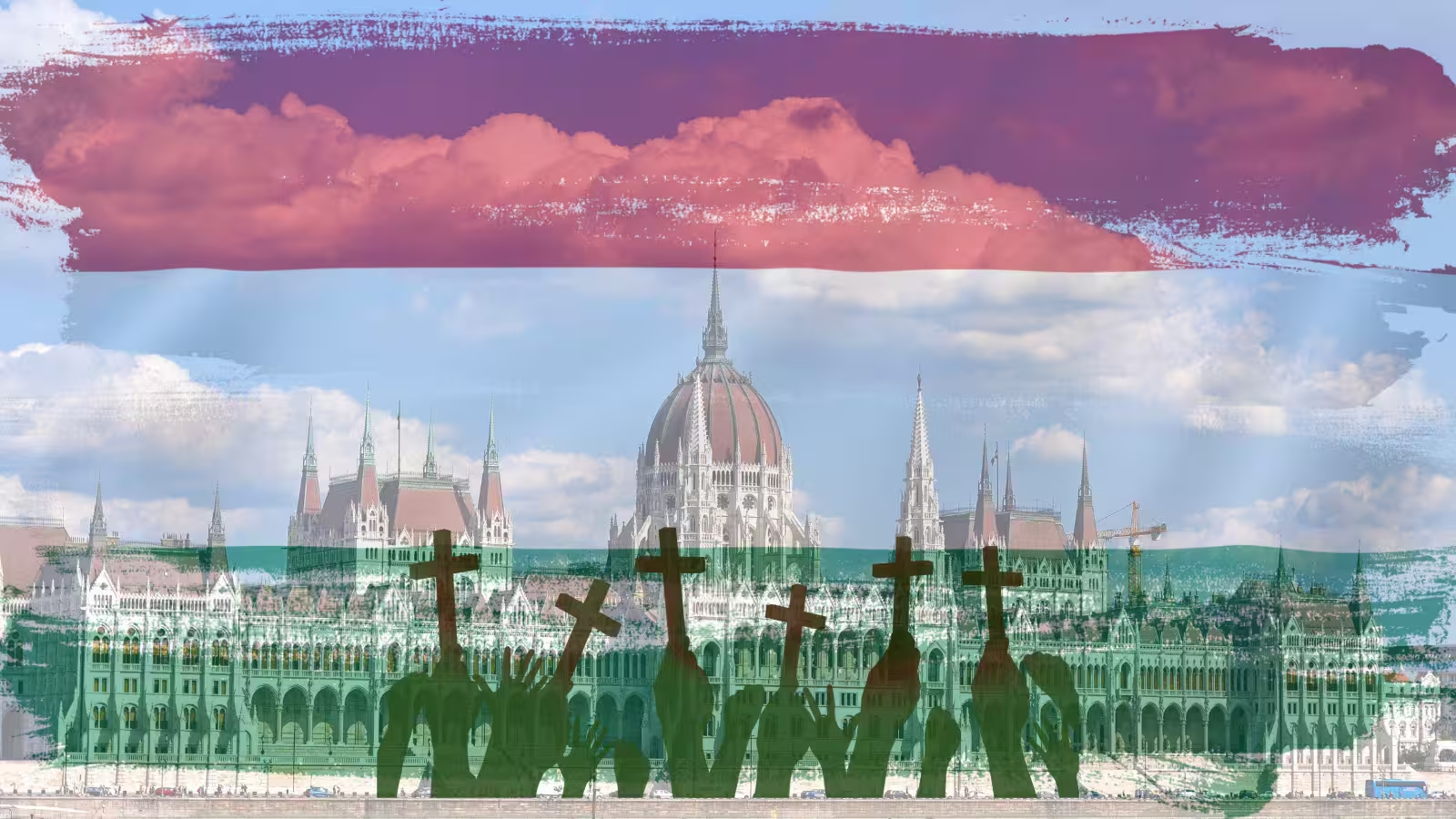
Normalization of illiberal constitutionalism in Hungary through the inclusion of ‘Christianity’ into the illiberal constitutional script.

Professor Renáta Uitz & Dr Dorjana Bojanovska Popovska
Dorjana Bojanovska & Renata Uitz, Budapest
Image: Sophie Lange, project Il-liberal
Professor Renáta Uitz (PI Budapest)
Renáta Uitz will study the normalization of illiberal constitutionalism in Hungary through the inclusion of ‘Christianity’ into the illiberal constitutional script and — consequently — to the constitutional canon. Generally, the normalization of illiberal practices presents a methodological challenge for the study of illiberal constitutional practices, as well as a practical challenge for countering the effect of illiberal practices in Europe amidst a global third wave of autocratization.
Hungary’s iterative constitutional changes to this effect were both prefaced and supplemented by practices elsewhere in Europe, involving supranational and private actors. A focused, comparative study will contribute to the consolidation of the illiberal constitutional canon, and also to the operation of mechanisms that prevent or undermine the efforts to counter the uses and misuse of Christianity in support of illiberal democracy.
Dr Dorjana Bojanovska Popovska
Centering on the Eastern European experience, Dorjana’s project aims to illuminate the correlation between the erosion of liberalism and secularism by positioning certain government practices as well as judicial responses within the frame of reversed secularization.
Reversed secularization is a process of political renegotiation that rearranges the landscapes of state-religion relationships towards greater entanglement and occurs on the legislative and adjudicative level. An outcome of such a process is the thinning and/or thickening of the principle of constitutional secularism. Although not a symptom of illiberal democracies exclusively, reversed secularization in illiberal democracies has a specific function – one as a tool used to undermine the foundations of the liberal state, by serving particular goals in the larger “project of illiberalization.” Thus, the project offers an in-depth historical, interdisciplinary, and comparative analysis of reversed secularization as one phenomenon inherent to the illiberal challenge, considering historical factors and contextual considerations that lead to or aid the process.